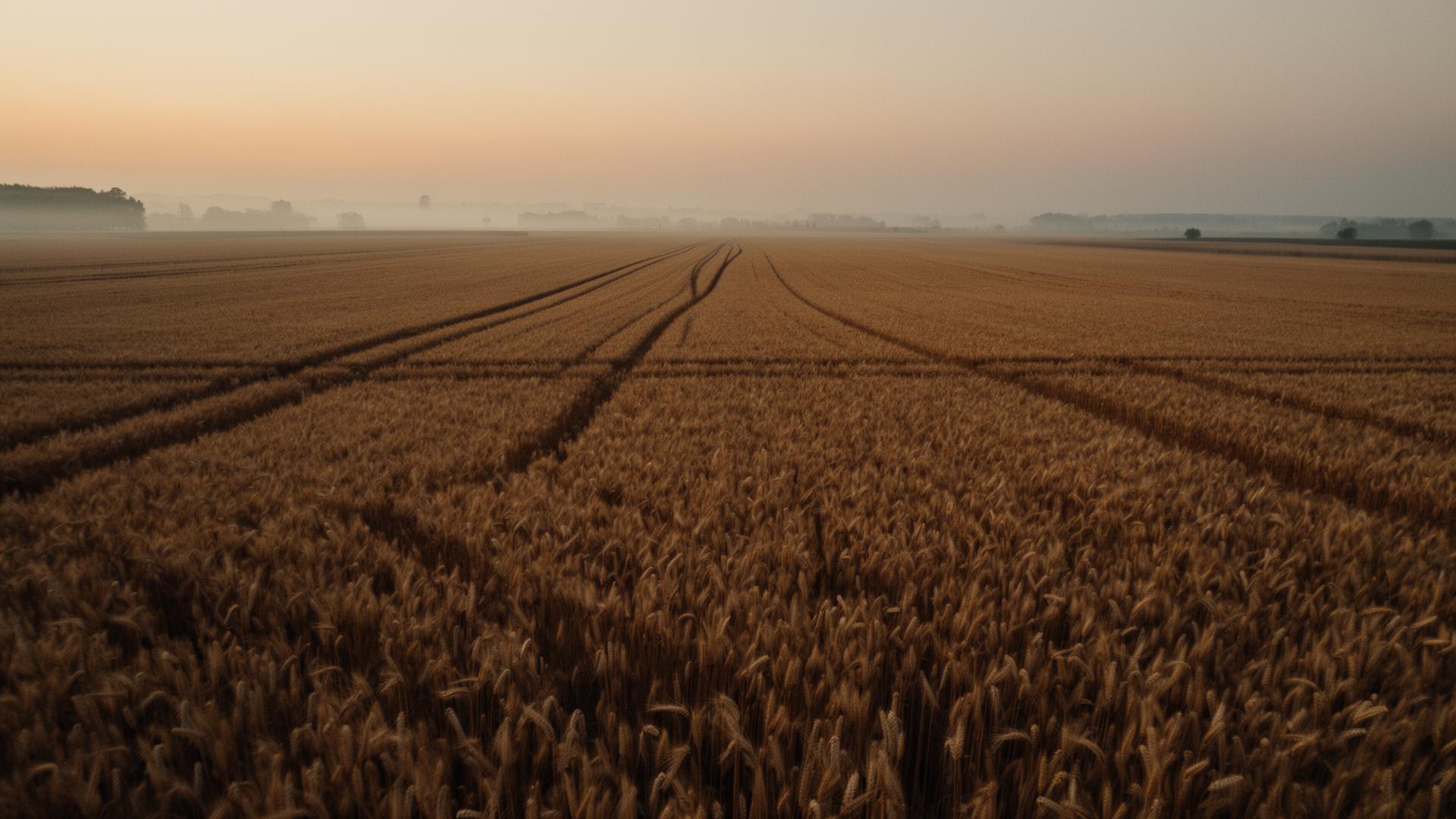
For farmers
The compound restores the land you already farm.
A region-specific biological consortium, prescribed to your field and applied through equipment you already own. Modelled payback in the first season; by year three the biology is doing work the inputs used to do.
Wheat economics
One harvest. Annual reapplication. Three scenarios per hectare.
Model assumes baseline yield of 3.5 t/ha, wheat price $250/t, full Harvestria service at $150/ha/yr including soil diagnosis, biology, application and in-season monitoring.
Farmer cohorts we serve.
Smallholder farmers
Bundled with cooperative or DFI financing. Pay-on-harvest. Outcomes measured against an agreed agronomic baseline.
Commercial farms
Multi-parcel deployment, on-site agronomist, integrated with existing equipment and ERP. Annual contracts.
Cooperatives
Regional rollouts with shared lab capacity, group telemetry, and farmer-level economic dashboards.
How the land changes over time
Year one restores function. Year two amplifies it. Year three is different in kind.
Microbial community, organic carbon, root networks build on themselves. A field three years in is not three times year one — it is structurally different soil. The curve bends, season over season.
Baseline established. Consortium applied. First yield uplift recorded.
Microbial community stabilises. Synthetic input dependence drops further.
The soil now does work the inputs used to do. The improvement sustains itself.
Outcomes
What changes on your farm.
All figures modelled · cohort median · pending public field-data release.